Global Engineering Delivery
7. How Engineering Teams Around the World Deliver Better Projects
This is where the story gets personal. Behind every successful engineering resource management deployment is a team of real people — project managers, engineers, PMO directors — who were quietly frustrated, quietly losing hours, and quietly watching projects slip. Until they weren’t.
Here is how different engineering disciplines and geographies are using resource management software to deliver transformative outcomes.
Global Use Cases
From software, defense, and aerospace to infrastructure, mining, precision manufacturing, construction, environmental engineering, transportation, automotive, R&D, and specialized civil engineering, resource planning challenges vary by geography — but the need for visibility, control, and real-time decisions is universal.
USA
🇺🇸 USA — Software, Defense, and Aerospace Engineering
US engineering organizations — in technology, aerospace, and defense — operate in some of the most resource-demanding environments in the world. Multi-disciplinary programs where software, hardware, systems, and test engineering must coordinate precisely. Timelines compressed by DoD contract requirements. Certification and compliance constraints that make resource substitution genuinely difficult.
The operational reality: a single missed skill match can trigger a program review. A single double-booking of a cleared professional can delay a government deliverable by weeks. The tolerance for ad hoc resource management is zero.
US engineering firms using Celoxis are doing so specifically because of its portfolio-level conflict detection, its skill and certification tracking, and its ability to model the resource impact of program changes before committing. When a subcontractor deliverable slips and changes downstream resource schedules, Celoxis surfaces the impact immediately — and gives the program manager the data to make a fast, informed recovery decision.
United Kingdom
🇬🇧 UK — Infrastructure, Civil, and Precision Engineering
UK engineering firms — from civil infrastructure consultancies working on HS2 and Crossrail-scale programs to precision instrument manufacturers serving global R&D markets — face a unique combination of regulatory rigor, multi-stakeholder complexity, and the need to deploy certified professionals across a portfolio of concurrent projects.
Edinburgh Instruments, based in Livingston, Scotland, exemplifies the UK engineering resource challenge: global operations, multi-phase projects, and a previous reliance on Excel that was consuming hours of management time while delivering opaque, error-prone data. Their 25% improvement in resource allocation efficiency and 30% gain in stakeholder transparency after deploying Celoxis represents the kind of step-change improvement that UK engineering leaders are actively seeking.
For UK engineering firms managing GDPR data obligations and operating within ISO and regulatory frameworks, Celoxis’s compliance architecture is not a nice-to-have. It’s a prerequisite.
Australia
🇦🇺 Australia — Mining, Resources, and Field Engineering
Australian engineering organizations in mining, energy, and civil infrastructure face a resource management challenge that is geographic as much as organizational. Projects are often located in remote areas. Teams are dispersed across enormous distances. On-site presence requirements change frequently based on project phase — and tracking which engineers need to be where, and when, is a logistical challenge of enormous complexity.
GroundProbe, based in Australia, captures this challenge precisely. With teams across multiple locations and projects requiring specific on-site presence during defined phases, their previous approach of managing resources through spreadsheets and verbal communication was creating missed deadlines and cost overruns that were preventable. Celoxis gave them the centralized visibility and real-time tracking to manage dispersed engineering teams with the same precision as co-located ones.
For Australian engineering organizations managing FIFO (Fly-In Fly-Out) workforces, multi-site field programs, and remote monitoring operations, Celoxis’s cloud-based architecture, mobile accessibility, and real-time synchronization aren’t optional features. They’re operational requirements.
Canada
🇨🇦 Canada — Construction, Environmental, and Transportation Engineering
Canadian engineering firms navigate a resource planning environment shaped by seasonal demand cycles, project-based hiring, and the complex stakeholder requirements of public infrastructure programs that must satisfy federal, provincial, and municipal governance layers simultaneously.
Construction engineering firms in Ontario. Environmental consultancies managing watershed restoration programs in British Columbia. Transportation engineering practices delivering urban transit projects in Montreal and Calgary. Each of these sectors has its own resource planning complexity — and each benefits from a platform that can model resource demand across a multi-year portfolio, align hiring timelines to forecasted demand, and give project managers real-time visibility into utilization without requiring weekly manual reporting cycles.
Canadian engineering organizations using Celoxis are particularly focused on its role-based planning capability — the ability to plan resource demand by role before specific individuals are assigned — which is essential for organizations that staff projects through a combination of permanent engineers and project-based contractors hired to meet seasonal or program-specific demand.
Japan
🇯🇵 Japan — Precision Manufacturing, Automotive, and R&D Engineering
Japan’s engineering culture is defined by precision, process discipline, and a deep commitment to continuous improvement — principles that are directly embodied in how leading Japanese engineering organizations approach resource planning.
In precision manufacturing, automotive engineering, and R&D programs, resource planning errors are not just operationally costly — they are culturally significant. A double-booking that disrupts a supplier milestone or delays a product development gate review carries consequences that extend far beyond the immediate schedule impact.
Japanese engineering organizations using Celoxis are typically focused on three capabilities above all others: multi-level approval workflows that enforce the governance discipline expected in Japanese engineering culture; granular time tracking that captures actual vs. planned utilization at the task level; and comprehensive audit trails that provide the documentation required for continuous improvement reviews and quality management system requirements.
Celoxis’s ability to integrate with the broader engineering toolchain — including ERP systems and specialized manufacturing planning tools — also makes it a natural fit for large Japanese manufacturing and engineering organizations with complex technology landscapes.
Netherlands & Europe
🇩🇪 Netherlands & Europe — Civil Infrastructure and Specialized Engineering
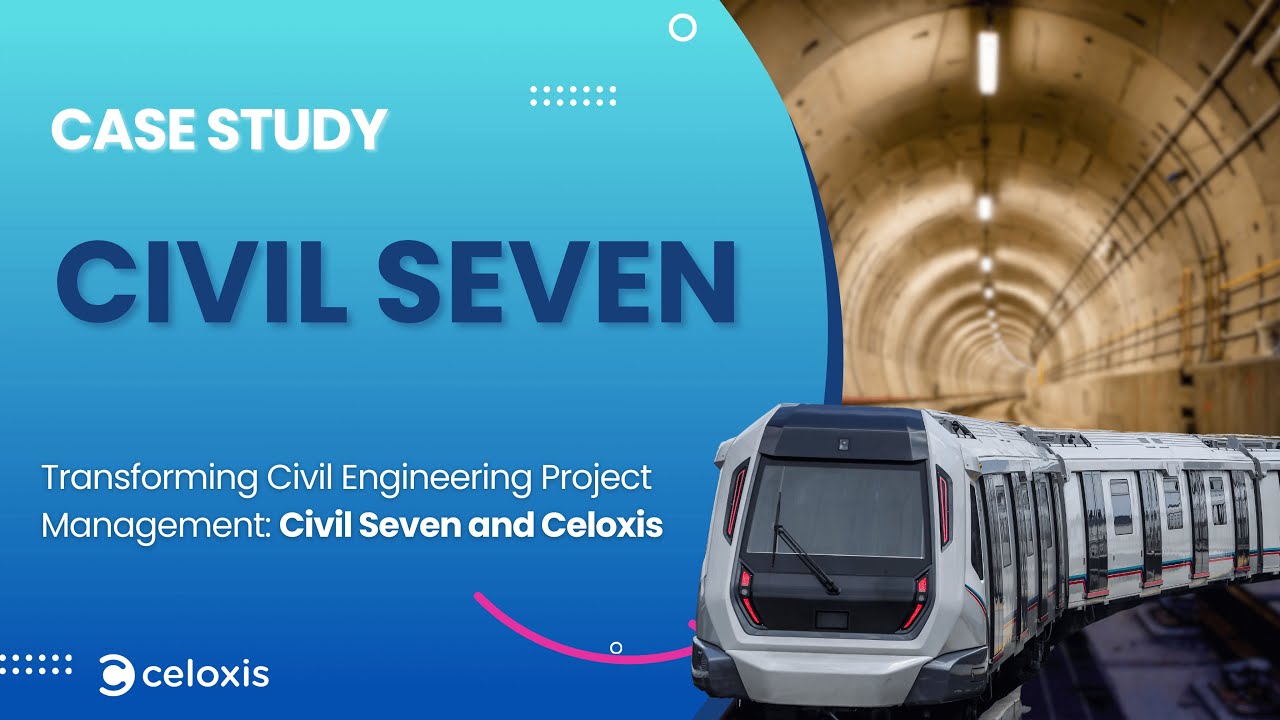
Beyond the five core country targets, European engineering firms — including Civil Seven in the Netherlands, working on critical infrastructure projects like the €380 million A9 tunnel in Amsterdam — are demonstrating that engineering resource management software delivers value in any engineering context where projects are complex, deadlines are binding, and resources are specialized.
Civil Seven’s experience of setting up a complex infrastructure project schedule in one week — compared to the weeks it previously took using a combination of spreadsheets and client software — illustrates a benefit that scales across every engineering geography: speed of planning. When the planning process itself is faster and more accurate, engineering teams spend less time managing the plan and more time executing it.