Ready to see Celoxis?
Execute enterprise programs with confidence
Get real-time portfolio KPIs, dependency mapping, governance workflows, and AI-powered resource planning.
Book a Demo →
Start Free Trial
Why Program Management Matters
Enterprise Programs Do Not Fail Because of Bad Ideas. They Fail Because of Weak Execution Discipline.
Your enterprise just launched a major initiative. Dozens of projects are running in parallel, budgets are committed, teams are mobilized — and yet six months in, no one can clearly answer whether the program is on track to deliver what the business actually needs.
Milestones slip. Resources get pulled in four directions. Leadership starts asking questions your status reports cannot answer. This is not a resourcing problem or a technology problem. It is a program management problem — and it is far more common than most organizations want to admit.
According to PMI’s 2025 Pulse of the Profession report, one in five enterprise programs still fails to meet its business goals, and McKinsey research puts the failure rate for large-scale digital transformation programs at 70%.
PMI 2025
1 in 5
Enterprise programs still fail to meet their business goals.
McKinsey
70%
Large-scale digital transformation programs fail to meet their goals.
Mature Practices
27%
Lower failure rates for organizations applying mature program management practices.
“The difference between a program that stalls and one that delivers is not luck or resources. It is method.”
The painful truth is that most of these failures are not caused by bad ideas or insufficient investment. They are caused by the absence of disciplined program management best practices: structured governance, cross-project dependency oversight, benefits realization tracking, and the organizational infrastructure to translate strategic intent into coordinated execution.
This guide covers the 12 program management best practices that large-scale enterprise initiatives actually require — drawn from PMI standards, Gartner research, and the operational realities of running complex, multi-project programs at scale.
Program Management Definition
What Is Program Management? A Working Definition for Enterprise Teams
Program management is the coordinated oversight of a group of related projects, managed together to achieve strategic benefits and control that would not be possible if those projects were managed independently.
It is not simply “managing multiple projects at once” — that misunderstanding is precisely what causes large-scale enterprise initiatives to collapse.
A program exists when the work has three characteristics that elevate it above project management:
01 / Interdependency
Shared resources, outputs, or timelines
Projects within the program share resources, outputs, or timelines in ways that require central coordination.
02 / Strategic Scope
Linked to an enterprise objective
The program is linked to a specific organizational objective that no single project could fully deliver alone.
03 / Benefits Horizon
Value is realized over time
Benefits are realized progressively over time, not just at a single delivery point.
💡
PMO stands for Project Management Office in most organizations, but in enterprise contexts, the program management function often operates as part of or alongside the PMO — providing governance, tools, and standards that individual program managers apply across their portfolios.
“Program management is the function that governs how a cluster of interdependent projects collectively delivers strategic transformation, sustained business outcomes, and portfolio-level value.”
Critical Distinction
Program Management vs. Project Management: The Critical Distinction
The difference between program and project management is not just scope. It is fundamentally a difference in what success means.
Focus
Project vs. Program
Project management: Deliver a defined output across scope, time, and cost.
Program management: Realize strategic benefits over time.
Success Metric
Output vs. Outcome
Project management: On time, on budget, within scope.
Program management: Business outcomes, ROI, and benefits realization.
Time Horizon
Fixed vs. Ongoing
Project management: Fixed start and end date.
Program management: Ongoing and may span years.
Dependencies
Single Project vs. Workstreams
Project management: Manages dependencies within a single project.
Program management: Manages dependencies across multiple projects and workstreams.
Stakeholders
Team vs. Enterprise Leadership
Project management: Project sponsor and delivery team.
Program management: C-suite, steering committees, and enterprise leadership.
Risk
Delivery Risk vs. Strategic Risk
Project management: Project-contained risks.
Program management: Cross-project, organizational, and strategic risks.
Change
Scope Control vs. Transformation
Project management: Scope change control.
Program management: Organizational transformation management.
Project Management Asks
“Are we delivering this project right?”
Program Management Asks
“Are we delivering the right outcomes for the business?”
💡
This distinction becomes critical at enterprise scale. A program manager who manages their program like a large project — focusing on delivery mechanics rather than strategic outcomes — is one of the most common root causes of enterprise program failure.
Failure Patterns
Why Enterprise Programs Fail — and What the Data Shows
The data on enterprise program failure is sobering and specific. These numbers are not abstract warnings — they point directly to the failure patterns program management best practices are designed to prevent.
PMI 2025
1 in 5
Enterprise programs still fail to meet their business goals.
McKinsey
70%
Digital transformation programs fail to meet their goals.
Business Acumen
18%
Program professionals demonstrate high business acumen, yet this group achieves 27% lower failure rates.
Communication
80%
Project and program failures are tied to poor communication and collaboration.
PMI Analysis
60%+
Failure rate for organizations that do not formally embed program management practices into strategy.
“Enterprise programs rarely fail because the idea was weak. They fail because governance, dependencies, benefits, and stakeholders were not managed with enough discipline.”
Root Causes
Five failure patterns program management best practices are designed to prevent
Root Cause 1
Misalignment between program scope and strategic objectives
Programs approved without a clear linkage to business strategy lose executive sponsorship quickly when competing priorities emerge.
Root Cause 2
Inadequate governance structures
Without a defined steering committee, escalation path, and stage-gate process, decisions that need enterprise-level authority pile up at the program manager level and create bottlenecks.
Root Cause 3
Resource contention across projects
Large programs share resources across workstreams. Without cross-project visibility, the same people get over-committed on multiple parallel deliverables until something breaks.
Root Cause 4
Benefits never tracked post-delivery
Programs are often closed when the last project finishes — but business benefits materialize 6, 12, or even 24 months later. Without benefits realization, the program is judged on delivery instead of actual business value.
Root Cause 5
Stakeholder engagement treated as communication, not management
Keeping stakeholders informed is not the same as managing expectations, securing decisions, and maintaining active commitment through 18 months of execution turbulence.
Enterprise Program Management Model
The Three Pillars of Enterprise Program Management
Across PMI’s Standard for Program Management, MSP, and Gartner’s research on PPM leadership, three core pillars consistently separate high-performing enterprise program management from reactive execution: governance, strategic alignment, and benefits realization.
01
Pillar 1
Governance
Program governance is the decision-making architecture that ensures the right people make the right decisions at the right level.
02
Pillar 2
Strategic Alignment
Every funding, prioritization, resource, and delivery decision should be evaluated through the lens of strategic contribution.
03
Pillar 3
Benefits Realization
Benefits realization ensures the organizational value promised at approval is tracked, measured, and confirmed after delivery.
1
Governance creates clear accountability
It includes the steering committee structure, escalation pathways, stage-gate review cadence, and financial authorization thresholds. Without governance, enterprise programs drift because accountability is diffuse.
2
Strategic alignment prevents program drift
Programs that lose alignment do not fail overnight. They drift, accumulating technical debt and organizational fatigue until a reset becomes necessary. PMO software that tracks alignment metrics makes that drift visible before it becomes irreversible.
3
Benefits realization proves business value
Benefits realization tracks whether the organizational value promised when the program was approved is actually delivered. It shifts success measurement from completed outputs to measurable performance improvement.
💡
These three pillars do not operate sequentially. They are concurrent, interlocking disciplines that define the operating model of mature enterprise program management.
Framework Comparison
Program Management Frameworks: PMI, MSP, and SAFe Compared
Choosing the right framework is one of the first and most consequential program management best practices. No single framework fits every organizational context.
PMI Standard
PMI Standard for Program Management
A governance-led program management framework focused on benefits management, stakeholder engagement, and structured oversight.
Origin: Project Management Institute
Best for: Large enterprises with established PMO structures and regulated industries.
Limitation: Can be heavy for fast-moving commercial programs.
MSP
Managing Successful Programmes
A transformation-focused framework built around blueprint-based delivery and structured change outcomes.
Origin: AXELOS / UK Cabinet Office
Best for: Government, public sector, and large transformation programs.
Limitation: Less flexible for hybrid Agile/waterfall environments.
SAFe
Scaled Agile Framework
An Agile delivery framework designed for coordinating work across teams, programs, and portfolios.
Origin: Scaled Agile Inc.
Best for: Technology-led programs, product development, and digital transformation.
Limitation: Requires deep Agile maturity to implement effectively.
Hybrid Model
PMI + Agile
A practical enterprise approach combining program-level governance with adaptive project delivery.
Origin: Organizational adaptation
Best for: Large commercial enterprises running complex programs.
Limitation: Requires strong program management leadership to maintain coherence.
Framework
Origin
Core Focus
Best For
Key Limitation
PMI Standard for Program Management
Project Management Institute
Benefits management, stakeholder engagement, governance
Large enterprises with established PMO structures
Can be heavy for fast-moving programs
MSP
AXELOS / UK Cabinet Office
Transformational change, blueprint-based delivery
Government, public sector, large transformation programs
Less flexible for hybrid environments
SAFe
Scaled Agile Inc.
Agile delivery at program and portfolio scale
Technology-led programs and digital transformation
Requires deep Agile maturity
Hybrid
Organizational adaptation
Governance + adaptive delivery
Most large commercial enterprises
Requires strong leadership
💡
Most large enterprises today operate with a hybrid approach. PMI-style governance and benefits tracking sit at the program level, while individual projects may use Agile delivery methods. This requires program managers who are fluent in both worlds.
Best Practices
12 Program Management Best Practices for Large-Scale Initiatives
Foundation Practices set the strategic mandate before execution begins. The first and most important step is defining the program charter before any project starts.
01
Foundation Practice
Define the Program Charter Before Any Project Starts
The program charter is the foundational document that authorizes the program’s existence, scope, and accountability structure. It is not a project plan. It is not a scope document. It is the strategic mandate that defines why this collection of work is being undertaken at all.
A robust enterprise program charter includes:
Strategic objectives
The business goals the program is designed to deliver.
Measurable benefits
Program-level benefits with an expected realization timeline.
Program sponsor
A named sponsor with explicit authority level.
Steering committee
Committee composition, decision rights, and ownership.
Scope boundary
What is inside the program and what is explicitly out.
Resource and budget envelope
Resource envelope and financial authorization level.
Assumptions and constraints
Known assumptions, constraints, and dependencies.
⚠️
What most program management guides miss: the program charter needs explicit sign-off from whoever controls the strategic budget — not just the project sponsor. Programs without C-suite-level charter authorization lose budget protection the moment priorities shift.
💡
How
Celoxis
supports this: Celoxis enables program-level documentation, goal tracking, and stakeholder role mapping from program inception — creating a centralized reference that keeps all projects and resources linked to the original strategic mandate throughout the program lifecycle.
02
Governance & Execution Practice
Establish Program Governance Before You Need It
Governance is the program management best practice most frequently deferred until it is urgently needed — and that is exactly when it is hardest to implement.
Setting up the steering committee, defining the escalation matrix, and establishing stage-gate review cadences must happen before program execution begins, not in response to a crisis.
Enterprise governance structures for large programs typically include:
Executive Authority
Program Sponsor
Single accountable executive with budget authority and strategic ownership.
Decision Body
Steering Committee
Cross-functional leadership body that reviews program performance, resolves escalations, and provides strategic direction.
Operational Owner
Program Manager
Responsible for day-to-day coordination, inter-project dependency management, and stakeholder reporting.
Delivery Owners
Project Managers
Delivery owners for each component project, reporting into the program manager.
Change Authority
Change Control Board
Authority body for approving changes that impact program scope, schedule, or budget.
💡
A critical distinction for enterprise programs: governance is not bureaucracy. Lean, well-designed governance reduces decision latency. Programs with unclear escalation paths accumulate unresolved decisions at the program manager level — and unresolved decisions are one of the biggest sources of avoidable delay in large-scale initiatives.
03
Foundation Practice
Build a Program-Level Risk Register — Not Just Project Risks
Most program management teams inherit risk registers from individual project managers. The problem is that project-level risks are scoped to individual deliverables, not to the program as a whole.
Enterprise programs require a separate, program-level risk register that captures risks across workstreams, resources, strategy, and organizational change.
A program-level risk register should capture:
Risk Type 01
Cross-project dependency risks
Delays in one workstream that cascade into multiple others.
Risk Type 02
Resource concentration risks
Key individuals whose unavailability would impact multiple parallel projects simultaneously.
Risk Type 03
Strategic risks
Changes in organizational priorities, market conditions, or regulations that could invalidate the program’s business case.
Risk Type 04
Organizational change risks
Stakeholder resistance, adoption barriers, or cultural friction that could undermine benefits realization after delivery.
⚠️
Important: treat organizational change risk with the same rigor as technical risk. Large-scale transformation programs often fail because of people and adoption issues, not technical delivery failures.
💡
Governance & Execution Practices: Once the program charter, governance model, and risk register are in place, enterprise teams can move into execution with clearer accountability, stronger escalation paths, and better visibility into program-level risk.
04
Governance & Execution Practice
Manage Interdependencies Proactively, Not Reactively
Interdependency management is the core technical competency that distinguishes enterprise program management from project management.
In a program with 6 to 20 parallel projects, each project depends on others through shared data, shared teams, sequential deliverables, or shared infrastructure. When these dependencies are not mapped and monitored, a delay in one project ripples across the entire program invisibly until it surfaces as a crisis.
Best practices for enterprise dependency management:
Step 01
Map all cross-project dependencies
Capture dependencies at program initiation and categorize them by type: finish-to-start, shared resource, shared output, or regulatory gate.
Step 02
Assign a dependency owner
Every inter-project dependency needs someone accountable for monitoring, updating, and escalating when the dependency is at risk.
Step 03
Review the dependency log weekly
Discuss dependency health in weekly program status meetings, not only when something breaks or a workstream is already delayed.
Step 04
Visualize dependencies in one timeline
Use program management software that shows cross-project dependencies in a single Gantt or timeline view, giving program managers real-time visibility without manual report aggregation.
⚠️
The risk: unmanaged dependencies create invisible delays. By the time the issue appears in a standard status report, the delay may already have cascaded across multiple workstreams.
💡
How Celoxis supports this: Celoxis helps program managers visualize inter-project dependencies through interactive Gantt charts and portfolio timelines, so cross-project risks can be spotted before they become delivery failures.
05
Governance & Execution Practice
Separate Program-Level Change Control from Project-Level Change Management
Large enterprise programs will change. Scope will expand. Priorities will shift. Technology choices will evolve.
The question is not whether change will happen, but whether the program has a structured process for evaluating, approving, and absorbing change without losing momentum or strategic alignment.
Discipline 01
Program-Level Change Control
Governs formal changes to program scope, budget, and schedule — especially changes requiring Steering Committee or sponsor approval. It prevents scope creep at the program level, where uncontrolled growth is usually most expensive.
Discipline 02
Organizational Change Management
Governs the human side of the program — how stakeholders, teams, and end users are prepared, enabled, and supported through the transformation the program represents.
Two distinct disciplines need to coexist:
1
Program-level change control evaluates formal changes to scope, budget, and schedule so the program does not lose strategic alignment.
2
Organizational change management prepares the business to adopt new processes, systems, behaviors, and operating models.
3
Dedicated change management resources are required when programs alter business processes, technology systems, or organizational structures at scale.
⚠️
Common mistake: treating change control and change management as the same thing. A technically successful delivery that the organization cannot or will not adopt is not a successful program.
💡
How Celoxis supports this: Celoxis helps teams manage change requests, approvals, governance workflows, and stakeholder visibility in one centralized program environment.
06
Governance & Execution Practice
Apply Stage-Gate Reviews at the Program Level
Stage-gate governance is a program management best practice that enterprise organizations often apply to individual projects but neglect at the program level.
A stage-gate process for the program itself — with defined criteria for advancing from initiation to planning, planning to execution, and execution to benefits realization — creates formal checkpoints where leadership can assess whether the program still makes strategic sense and whether the business case remains valid.
Key program stage gates for large enterprise initiatives:
1
Gate 1 / Before Charter Sign-Off
Mandate
Is the strategic case sound? Is executive sponsorship secure?
2
Gate 2 / After Program Planning
Blueprint
Is the program plan credible? Are resources committed? Are dependencies resolved?
3
Gate 3 / Before Major Investment Begins
Execution Entry
Are governance structures in place? Are first project deliverables ready?
4
Gate 4 / At 40–50% Completion
Mid-Program Review
Is the benefits case still valid? Are strategic priorities unchanged? Should the program continue, adjust, or stop?
5
Gate 5 / Before Program Close
Transition
Are all projects complete? Is the benefits realization process in place? Is the organization ready to sustain the change?
⚠️
The most underused gate is Gate 4 — the mid-program review. In rapidly changing business environments, a program approved 18 months ago may be pursuing a business case that no longer reflects organizational priorities.
💡
Best practice: a formal mid-program gate forces an honest re-evaluation rather than letting momentum carry a misaligned program to completion.
07
Governance & Execution Practice
Treat Resource Management as a Portfolio Decision, Not a Project Decision
Resource contention — where the same specialists are committed to multiple parallel projects within the program simultaneously — is one of the most common causes of schedule slippage in large enterprise initiatives.
It is also one of the hardest problems to solve at the project level, because no individual project manager has visibility into the full resource picture across every workstream.
Program-level resource management best practices:
Practice 01
Maintain a centralized resource pool
Reflect all committed and available capacity across every project, team, and workstream in the program.
Practice 02
Model demand before start dates
Projects should not begin until resource availability is confirmed, not assumed.
Practice 03
Identify single points of resource failure
Flag individuals whose absence would impact multiple workstreams simultaneously and build contingency plans.
Practice 04
Review utilization weekly
Track utilization at the program level. Resource utilization above 85% is a leading indicator of delivery risk.
Risk Signal
Resource utilization above 85%
85%+
When utilization stays above this level, delivery risk, burnout exposure, and schedule slippage become much harder to control.
⚠️
Why project-level planning fails: individual project managers cannot solve resource contention when the same specialists are being pulled across multiple programs, workstreams, and executive priorities.
💡
How Celoxis supports this: Celoxis provides portfolio-level resource planning, capacity forecasting, utilization tracking, and demand visibility so PMOs can resolve conflicts before they become delivery delays.
Next Section
People & Communication Practices
Once governance, dependencies, risk, and resources are visible, the next challenge is managing stakeholder engagement, communication discipline, and organizational adoption.
08
People & Communication Practice
Develop a Formal Stakeholder Engagement Strategy
Stakeholder management is not a communication plan. Sending weekly status emails to a distribution list is not stakeholder engagement.
For large-scale enterprise programs, stakeholder engagement is an active, ongoing management practice that requires the same rigor as risk management or resource planning.
A formal stakeholder engagement strategy includes:
Component 01
Stakeholder mapping
Categorize stakeholders by influence level and interest, then identify their specific concerns about program outcomes.
Component 02
Engagement by stakeholder type
Executive sponsors need different information at different intervals than operational stakeholders, system users, or external bodies.
Component 03
Two-way communication mechanisms
Create feedback channels that allow stakeholders to raise concerns and surface blockers before they become escalations.
Component 04
Resistance management protocols
Build explicit plans for engaging resistant stakeholders, especially influential ones, before opposition affects adoption.
Weak Approach
Communication-only
Sending status updates, sharing reports, and assuming silence means support.
Strong Approach
Active engagement
Managing expectations, securing decisions, identifying resistance, and tracking stakeholder health weekly.
⚠️
Enterprise risk signal: in programs involving organizational change, a disengaged senior stakeholder is a higher-risk item than most technical risks.
💡
Best practice: include stakeholder health in the weekly program review alongside schedule, budget, resource utilization, dependencies, and risk.
09
People & Communication Practice
Establish a Single Source of Truth for the Entire Program
In large enterprise programs spanning multiple teams, workstreams, and geographies, information fragmentation is a constant enemy.
When different stakeholders are working from different versions of the program plan, the risk register, the resource allocation, or the status report, decision-making slows and errors multiply.
Not Enough
Shared folders
Static documents, manual reports, and individually curated updates create version conflicts and slow decisions.
Best Practice
Live program system
A real-time system centralizes program status, financials, resources, risks, dependencies, and benefits tracking.
A true single source of truth centralizes:
Project statuses
Current progress across every workstream.
Financial actuals
Budget, cost, variance, and forecast visibility.
Resource allocation
Committed and available capacity across teams.
Risk and issue logs
Program-level risks, issues, owners, and actions.
Dependency maps
Cross-project dependencies and escalation triggers.
Benefits tracking
Planned benefits, owners, timelines, and realization status.
⚠️
The risk: every program decision should be informed by live program data, not individually curated project manager reports.
💡
How Celoxis supports this: Celoxis provides a unified PPM environment where program data across every workstream, resource pool, and financial line is aggregated in real time. Program managers can move from portfolio summary to project detail in a single click, with no manual report compilation required.
10
People & Communication Practice
Build Change Management Into the Program Plan — Not the Post-Delivery Phase
One of the most consistent findings in enterprise program research is that organizational change management, when treated as a post-delivery activity, routinely fails.
Benefits are not realized because end users do not adopt new processes. Governance changes do not stick because impacted teams were not prepared. Technology deployments go live, but business behavior does not change.
Change management belongs in the program plan from day one, with:
Requirement 01
Dedicated change workstream
Not a project task buried inside one of the constituent projects.
Requirement 02
Change impact assessments
Completed before execution begins so adoption risk is visible early.
Requirement 03
Stakeholder readiness reviews
Built into each stage gate to confirm whether teams are ready for the next phase.
Requirement 04
Training and adoption plans
Formal training, communication, and adoption measurement plans.
Requirement 05
Post-delivery sustainment
Benefit sustainment activities explicitly included in the program plan and budget.
Late Approach
Change after deployment
Adoption risk is discovered after delivery, when resistance is harder and more expensive to address.
Strong Approach
Change from initiation
Adoption planning begins early, so teams are prepared before new systems, processes, or governance changes go live.
⚠️
Common failure pattern: a program can be technically delivered and still fail if the organization does not adopt the new way of working.
💡
Best practice: programs that integrate change management from initiation — not from deployment — are better positioned for adoption, faster benefits realization, and sustained business impact.
Measurement & Continuous Improvement Practices
11
Outcome Measurement Practice
Track Program-Level KPIs That Measure Outcomes, Not Just Outputs
Most programs track project-level delivery metrics — on-time, on-budget, and in-scope — and call them program KPIs. They are not.
Program-level KPIs measure whether the program is realizing the business outcomes it was funded to deliver. That is a fundamentally different question from whether individual projects are being delivered correctly.
Output Metrics
Project delivery health
Tracks whether individual projects are on time, on budget, and within scope.
Outcome KPIs
Business value realization
Measures whether the program is delivering benefits, ROI, strategic alignment, adoption, and enterprise impact.
Core program management KPIs for enterprise initiatives:
Benefits Realization Rate
Measures: % of planned benefits delivered vs. planned.
Why it matters: The ultimate measure of program success.
Strategic Alignment Score
Measures: % of program workstreams mapped to active strategic goals.
Why it matters: Prevents strategic drift over long programs.
Program ROI
Measures: (Total Benefits Realized – Total Program Cost) / Total Cost.
Why it matters: Justifies continued investment and future program approval.
Stakeholder Satisfaction Index
Measures: Composite score from executive and operational stakeholders.
Why it matters: Leading indicator of adoption risk.
Schedule Performance Index
Measures: Earned Value / Planned Value across the full program.
Why it matters: Forward-looking schedule health signal.
Resource Utilization Rate
Measures: % of program resource capacity productively deployed.
Why it matters: Identifies capacity risk and burnout exposure.
Risk Response Time
Measures: Average time from risk identified to mitigation action taken.
Why it matters: Measures governance effectiveness.
Change Adoption Rate
Measures: % of target users actively adopting program outputs.
Why it matters: Critical for transformation programs.
⚠️
Do not confuse project metrics with program KPIs. Program KPIs should be aggregated from project data, but reported and acted upon as program-level indicators.
💡
Best practice: use program management software that surfaces these KPIs automatically rather than requiring manual compilation across spreadsheets, reports, and project updates.
12
Measurement & Continuous Improvement Practice
Conduct Mid-Program Reviews and Post-Program Retrospectives
Large enterprise programs run for months or years. Organizations that wait until program close to evaluate performance miss the entire opportunity to course-correct during execution.
During Execution
Mid-Program Review
Conducted at 40–50% completion to confirm whether the business case still holds, resources remain realistic, and benefits are tracking to forecast.
After Close
Post-Program Retrospective
Conducted within 60 days of program close to capture lessons learned, document failure patterns, and feed improvements back into the PMO methodology.
Mid-program reviews should assess:
Business case validity
Does the original business case still hold under current strategic conditions?
Resource realism
Are resource commitments still realistic across all projects and workstreams?
Benefits forecast
Is the benefits realization plan still tracking to forecast?
Strategic context
Have external changes altered the strategic context enough to warrant scope adjustment?
PMI Data Point
Organizations consistently using post-program retrospectives
25%
Post-program retrospectives are one of the most systematically underperformed practices in enterprise program management.
Post-program retrospectives capture the institutional knowledge that prevents the same failure patterns from recurring in future programs. This is where lessons learned become stronger governance, better planning assumptions, improved risk controls, and more mature PMO standards.
⚠️
Common mistake: waiting until program close to evaluate performance. By then, the opportunity to course-correct during execution is already gone.
💡
Best practice: conduct a formal retrospective within 60 days of program close with key stakeholders, document lessons learned, and feed those insights back into the PMO’s standard methodology.
Program Planning Framework
How to Build a Program Management Plan: Key Components
A program management plan is not a project plan. It is the governance and management framework that defines how the program will be organized, executed, controlled, and closed.
A program management plan references the individual project plans within the program, but it does not replace them. Its purpose is to define the program-level operating model, decision structure, controls, and success measurement system.
Core Components of an Enterprise Program Management Plan
01
Program Vision and Strategic Objectives
The business problem being solved, the strategic goals being served, and the measurable benefits expected.
02
Program Scope
What is included, what is explicitly excluded, and how the boundary between the program and related activities is managed.
03
Program Organization and Governance
Steering committee structure, escalation matrix, decision rights by role, and stage-gate process.
04
Program Roadmap
High-level timeline showing how constituent projects are sequenced, including interdependencies and major milestones.
05
Benefits Realization Plan
How planned benefits will be measured, who owns each benefit, and when measurements will occur, including post-delivery.
06
Resource Management Plan
Centralized resource pool, allocation principles across projects, capacity forecasting, and conflict resolution processes.
07
Risk Management Plan
Program-level risk register, risk ownership, escalation thresholds, mitigation workflows, and review cadence.
08
Stakeholder Engagement Plan
Stakeholder map, engagement approach by stakeholder type, communication schedule, and feedback mechanisms.
09
Change Management Plan
Organizational change workstream, readiness assessments, training plan, adoption measurement, and sustainment activities.
10
KPI and Reporting Framework
Program-level KPIs, reporting cadence, dashboard design, escalation triggers, and executive reporting structure.
💡
Best practice: treat the program management plan as the operating system for the program. It should connect strategy, governance, resources, risks, stakeholders, benefits, and reporting into one coordinated management framework.
Enterprise Program Office
Establishing a Program Management Office for Enterprise Scale
Establishing a program management office is one of the most impactful structural decisions a large enterprise can make when managing complex, multi-project initiatives.
The program office provides the infrastructure — standards, tools, processes, and skills — that enables consistent, high-quality program management across the organization.
A program office at the enterprise level is distinct from a departmental PMO. It operates at the portfolio and program level, serving multiple program managers simultaneously.
What an Enterprise Program Office Is Responsible For
01
Maintain enterprise standards
Own enterprise-wide program management standards, delivery methodology, governance models, and reusable templates.
02
Provide centralized tooling
Provide the PMO software and reporting infrastructure all programs use for visibility, governance, and execution control.
03
Aggregate portfolio performance
Consolidate portfolio-level performance data for executive reporting, steering committees, and strategic decision-making.
04
Conduct health assessments
Run program health assessments, governance audits, risk reviews, and methodology compliance checks.
05
Manage program intake
Manage the pipeline of incoming programs through formal intake, prioritization, approval, and sequencing processes.
Weak Program Office
Administrative reporting layer
Supports programs, collects reports, and maintains templates, but has limited authority over approval, prioritization, or stopping misaligned work.
Strategic Program Office
Portfolio governance body
Helps approve, prioritize, govern, and stop programs based on strategic value, capacity, performance, and benefits realization.
⚠️
Critical point: a program office should be positioned to approve, prioritize, and stop programs — not just support them. A program office without stop authority has no real strategic function.
💡
How Celoxis supports this: Celoxis gives enterprise program offices centralized portfolio visibility, governance workflows, executive dashboards, resource intelligence, and reporting infrastructure to manage programs at scale.
KPI Framework
Program-Level KPIs That Actually Measure Success
The following KPI framework gives program managers a concise, actionable set of metrics organized by measurement category. These KPIs help measure financial performance, delivery health, stakeholder adoption, governance effectiveness, and strategic alignment.
Financial
Program ROI
Formula: (Benefits – Costs) / Costs × 100
Cadence: Quarterly + at program close
Financial
Budget Variance
Formula: (Planned – Actual) / Planned × 100
Cadence: Monthly
Delivery
Benefits Realization Rate
Formula: (Realized Benefits / Planned Benefits) × 100
Cadence: At gates + 3/6/12 months post-close
Delivery
On-Time Milestone Rate
Method: % of program milestones hit on original dates
Cadence: Monthly
Delivery
SPI Program-Level
Formula: Earned Value / Planned Value
Cadence: Weekly
People
Stakeholder Satisfaction
Method: Survey score from sponsor and key stakeholders
Cadence: At each stage gate
People
Change Adoption Rate
Method: % of target users actively using program outputs
Cadence: Monthly post-launch
Governance
Risk Response Time
Method: Avg. days from risk log to mitigation action
Cadence: Weekly
Strategic
Strategic Alignment Score
Method: % of workstreams mapped to active strategic goals
Cadence: Quarterly
💡
Best practice: review program KPIs by category, not as one long report. Financial, delivery, people, governance, and strategic metrics each answer a different executive question.
Operationalizing Best Practices
How Program Management Software Operationalizes Best Practices
The best practices above are not theoretical. But without the right infrastructure, they remain aspirational — buried in documents that no one reads while programs run on informal communication and instinct.
This is where program management software closes the gap between intention and execution. The right system turns governance, dependency tracking, resource planning, KPI reporting, and benefits realization into everyday operating discipline.
What Program Management Software Must Enable
01
Centralize cross-project data
Give the program manager a single source of truth instead of 12 separate project status emails.
02
Visualize dependencies
Surface cross-project risks across all workstreams before they become schedule slippage.
03
Track resource allocation
Show capacity across the full program, not just within individual projects, so conflicts are visible early.
04
Surface KPIs automatically
Track budget variance, SPI, CPI, and utilization rates without manual report compilation.
05
Support benefits tracking
Allow PMOs to record planned benefits at intake and monitor realization after delivery.
06
Automate governance workflows
Route stage-gate approvals, risk escalations, and change control requests through defined workflows.
Celoxis for Enterprise Program Management
Built for Program and Portfolio Management Complexity
Celoxis is built specifically for this level of program and portfolio management complexity, helping PMOs move from documented best practices to operational discipline across workstreams, resources, finances, dependencies, and executive reporting.
Unified portfolio views
Aggregate all program workstreams into a single dashboard with drill-down to project and task level.
Interactive Gantt charts
Map dependencies across projects and give program managers real-time visibility into inter-project risks.
AI-powered resource planning
Forecast capacity versus demand across the full resource pool, not just individual projects.
Custom KPI dashboards
Surface program-level metrics automatically with configurable alerts when thresholds are breached.
Built-in Earned Value Analysis
CPI and SPI surface automatically from project actuals, with no manual calculation required.
Automated reporting
Send scheduled updates to steering committees without spending days on manual report compilation.
💡
The result: a program management environment where best practices are embedded into daily workflow — not buried in a methodology guide that gathers dust.
FAQ
FAQ: Program Management Best Practices
Quick answers to the most common questions about program management best practices, frameworks, KPIs, PMOs, and program management software.
What is program management in simple terms?
Program management is the coordinated oversight of a group of related projects, managed together to achieve strategic benefits that no single project could deliver alone. It focuses on business outcomes and benefits realization, not just project delivery.
What are the three pillars of program management?
The three core pillars of effective enterprise program management are governance, strategic alignment, and benefits realization. Governance creates the decision-making architecture, strategic alignment ensures program work contributes to organizational goals, and benefits realization tracks whether the promised business value is actually delivered.
What is the difference between program management and project management?
Project management focuses on delivering a defined output within scope, time, and budget. Program management focuses on delivering strategic business outcomes across a coordinated set of related projects. Program managers manage interdependencies, governance, benefits realization, and stakeholder alignment — not just individual task completion.
What is a program management plan?
A program management plan is the governance and management framework that defines how a program will be organized, executed, controlled, and closed. It includes the program’s strategic objectives, governance structure, resource management approach, benefits realization plan, stakeholder engagement strategy, and KPI framework.
What is a program management office?
A program management office, or program office, is the organizational function responsible for establishing and maintaining program management standards, tools, and governance across the enterprise. At the portfolio level, it also manages intake, prioritization, and performance oversight of active programs.
What is the best framework for enterprise program management?
There is no single best framework. PMI’s Standard for Program Management suits organizations with established governance structures and regulated delivery environments. MSP suits large transformation and government programs. SAFe suits technology-led programs requiring Agile delivery at scale. Most large commercial enterprises use a hybrid approach combining PMI-level governance with Agile project execution.
What KPIs should a program manager track?
The most important program-level KPIs are Benefits Realization Rate, Strategic Alignment Score, Program ROI, Budget Variance, SPI, Stakeholder Satisfaction Index, and Change Adoption Rate. The goal is to track outcome metrics, not just delivery outputs.
How does program management software help?
Program management software centralizes cross-project data, visualizes dependencies, surfaces KPIs automatically, manages resource allocation across all workstreams, automates governance workflows, and provides a single source of truth for the entire program. This allows program managers to spend less time compiling reports and more time managing the decisions that actually determine program outcomes.
Conclusion
From Best Practices to Competitive Advantage
Enterprise programs are where organizational ambition meets operational reality. They are where the gap between strategic intent and actual business outcomes gets either closed or widened.
That gap is determined almost entirely by how well the program is managed, not how boldly it was conceived.
The 12 program management best practices covered in this guide are not theoretical ideals. They are the operational disciplines that separate enterprise programs that deliver measurable business value from those that deliver outputs without outcomes.
Every practice in this list targets a specific failure pattern: programs that lose strategic alignment midway through execution, governance structures that emerge reactively instead of proactively, resource conflicts that no individual project manager can resolve alone, and benefits that are promised at approval but never formally tracked post-delivery.
“The organizations that win at enterprise program management are not the ones with the boldest initiatives. They are the ones that sustain execution discipline when complexity increases.”
What makes enterprise program management genuinely difficult is not the complexity of any single practice. It is sustaining all of them simultaneously across 12 to 24 months of execution, through leadership changes, shifting priorities, and the pressure to cut governance overhead in favor of moving faster.
Three Commitments Separate High-Performing Program Teams
01
Treat governance as an enabler
A well-designed steering committee, escalation matrix, and stage-gate process do not slow programs down. They eliminate decision latency and accountability confusion.
02
Measure outcomes, not just outputs
Delivering a program on time and on budget while expected business benefits never materialize is not success. It is an expensive miss.
03
Use tools that operationalize discipline
Spreadsheets, shared drives, and manual status emails cannot provide the real-time visibility, dependency mapping, and automated KPI surfacing large-scale programs require.
Celoxis Perspective
Turn Program Management Best Practices Into Daily Execution
Program management software like Celoxis transforms best practices from documented methodology into daily operational reality — centralizing data, automating governance workflows, and giving program managers the insight to act on problems before they become failures.
The gap between where your program management practices are today and where they need to be for consistent enterprise success is bridgeable. It requires clarity about which practices matter most, a platform that makes them executable at scale, and the organizational commitment to treat program management as a strategic capability rather than an administrative function.
💡
Final takeaway: that is the difference between programs that drain organizational energy and programs that compound it.
Key Takeaways
Key Takeaways
Program management is not scaled-up project management. It is a distinct discipline focused on strategic benefits realization, governance, and alignment across interdependent projects.
01
Program management is a distinct discipline
It focuses on strategic benefits realization, governance, and alignment across interdependent projects — not just managing more projects at once.
02
Enterprise programs still fail at scale
One in five enterprise programs still fails to meet business goals. The gap between high performers and average organizations is driven by program management maturity.
03
Three pillars must operate together
Governance, strategic alignment, and benefits realization must operate concurrently throughout the program lifecycle.
04
Governance must start before execution
Program charters, governance structures, steering committees, escalation paths, and stage-gate processes must be established before execution begins.
05
Risks, resources, and dependencies are program-level concerns
Resource management, risk management, and dependency management must be conducted at the program level — not delegated entirely to individual project managers.
06
Change management belongs in the plan from day one
Change management should be built into the program plan from initiation, not treated as a post-delivery activity.
07
Program KPIs measure outcomes
Program-level KPIs measure business outcomes such as Benefits Realization Rate, Strategic Alignment Score, Program ROI, and adoption — not just delivery outputs.
08
Software operationalizes the best practices
Purpose-built program management software such as Celoxis centralizes cross-project data, automates governance workflows, and surfaces KPIs in real time.
💡
Bottom line: mature program management turns enterprise initiatives from loosely connected projects into coordinated engines of strategic value.
Customer Case Study
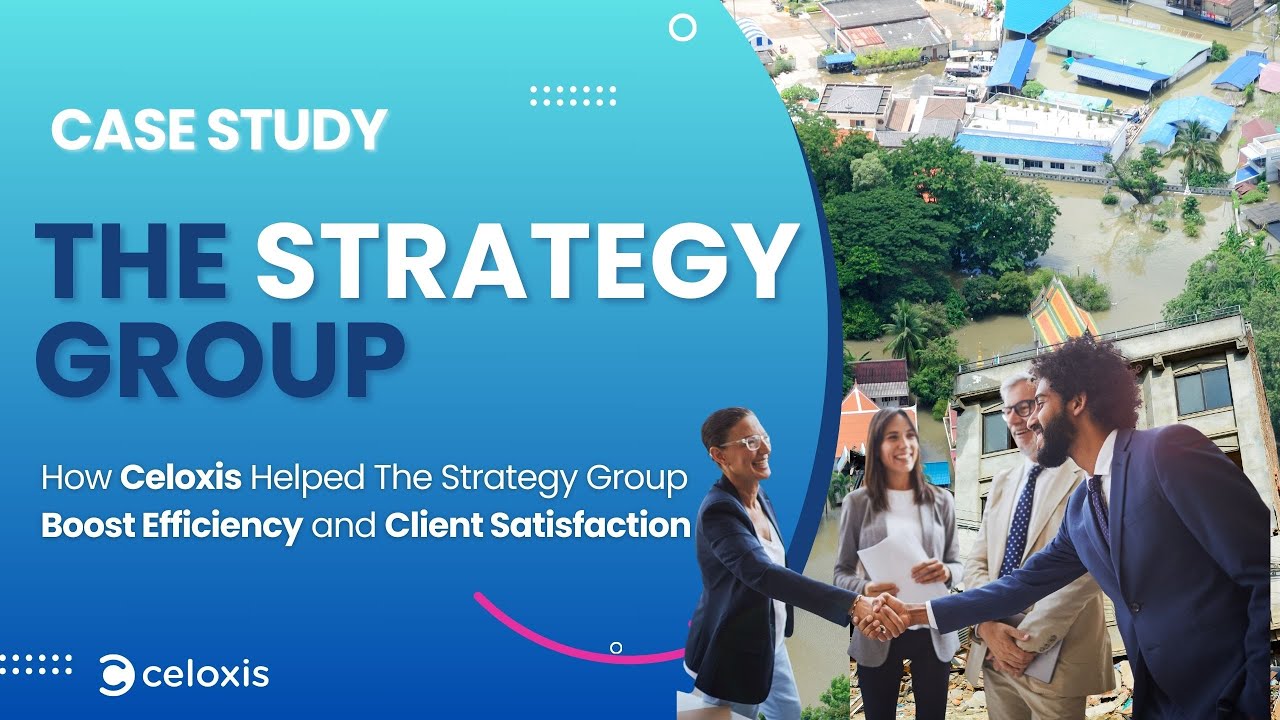
How Strategy Group Streamlined Project and Program Management with Celoxis
The Strategy Group, a project and program management firm based in the US Virgin Islands, needed a better way to manage complex disaster recovery initiatives, compliance monitoring, client reporting, and cross-project visibility. With Celoxis, the team moved away from spreadsheet-driven tracking and gained a unified platform for real-time updates, reporting, dependencies, and scalable program oversight.
Before Celoxis
Spreadsheet-driven tracking
Reporting took days, project managers used different tracking methods, and leaders lacked dashboard visibility into overlaps, risks, and dependencies.
After Celoxis
Real-time program visibility
The team gained cross-project views, faster reporting, scalable project roll-ups, dependency tracking, and improved client communication.
Days → Under 1 Hour
Reporting time reduced from days to under an hour using Celoxis dashboards and advanced reporting.
10x
Tenfold increase in project management capacity through centralized data and scalable project roll-ups.
Real-Time
Project managers can track tasks, dependencies, deadlines, risks, and client updates in one place.